
CONTENT STRATEGY- BOTMAS
A full content strategy brief for a regenerative farm
As my final assignment for the Masters in Content and Media Strategy, I developed a complete, action-ready content strategy for Botmas, a regenerative farm based in Friesland — covering everything from audience research to content ideas and an implementation plan. Botmas' challenge was to become visible beyond its existing customer base and reach a new audience open to organic food.
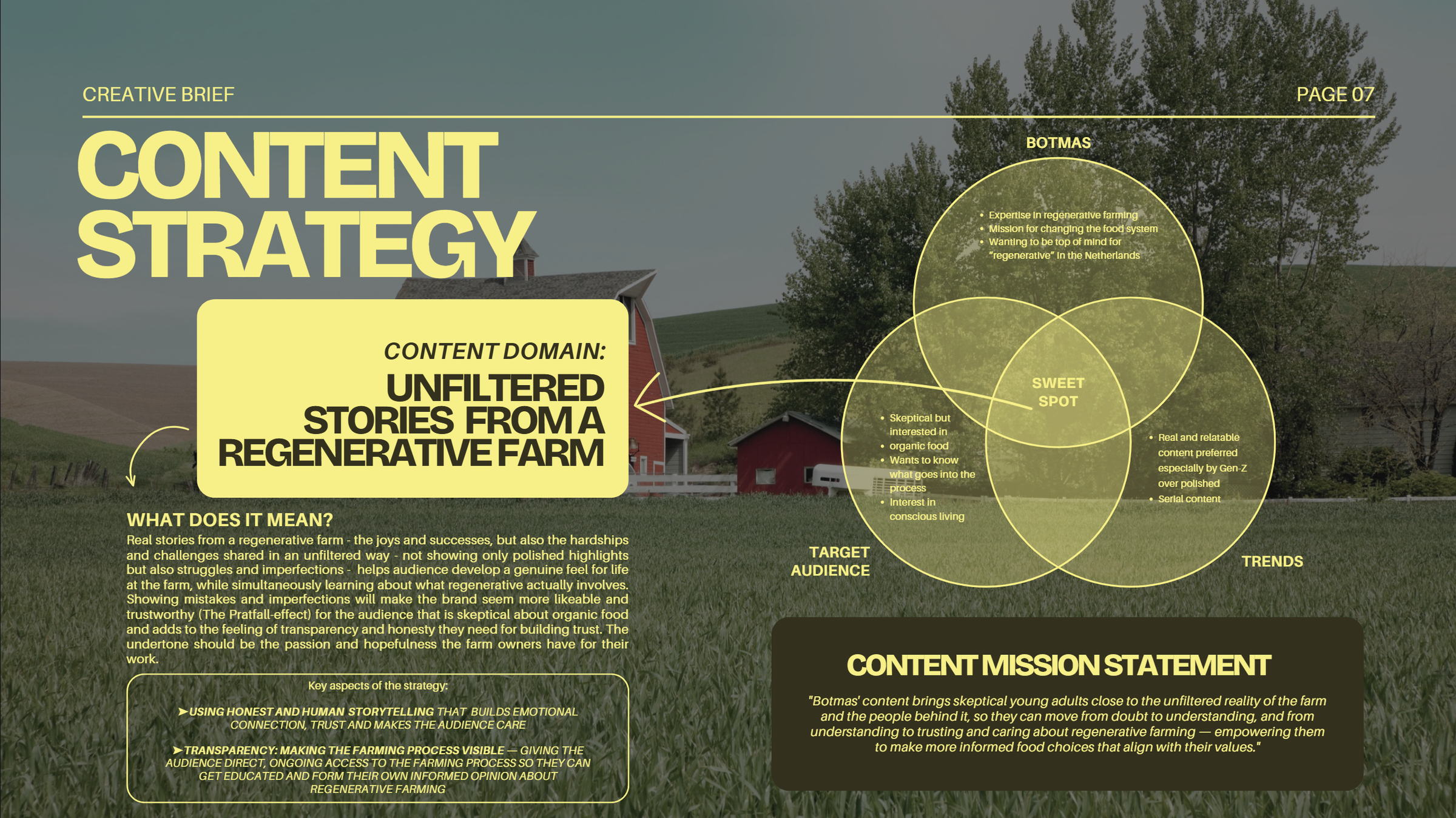
The Steps
1. DEFINING THE PROBLEM
Despite a unique product and advertising investment, Botmas' content wasn't standing out or driving engagement. I started with a content audit to identify why, then selected an ideal target audience based on existing research and conducted interviews to understand their habits, motivations, and barriers around organic food. The key insight: hesitation came from doubts about whether organic delivers on its promises, creating a need for more transparency.
2. STRATEGY
To counter the skepticism and give people a more honest look at life on the farm, the “Farm Diary” concept was developed, offering a transparent look on the farm life through first-person stories about everyday moments, challenges and experiences. The content would live mainly on the owned platform - the website, with Instagram and YouTube helping people discover it.
3. CREATION
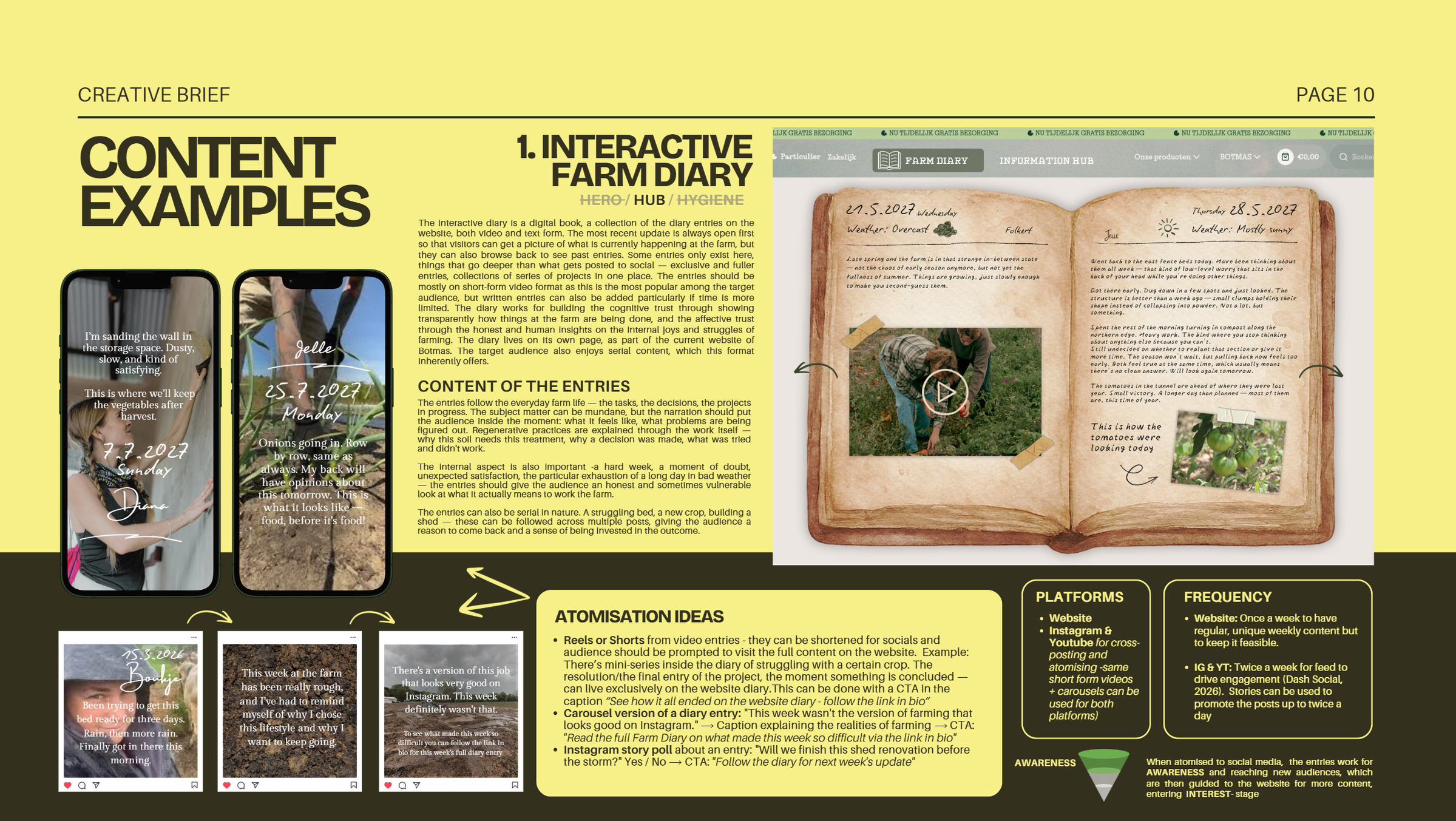
I developed repeatable content formats around the Farm Diary concept, including weekly short-form video diaries that educate audiences about regenerative farming while building a personal connection with the farm.
4. IMPLEMENTATION
To make the strategy action-ready, a channel plan, content calendar, repurposing guidelines, budgeting, task allocation, and a clear distribution plan were included.
Example page with one of the content formats
What was delivered
- Environment analysis: Brand analysis, competitor analysis, and macro-analysis mapping the brand's internal position and external content landscape.
- Content audit: A review of Botmas' existing channels such as the website and socials, identifying tone, format, and content gaps, with recommendations for what to keep, fix, or add.
- Audience persona: A detailed persona built from interviews and existing research.
- Customer journey map: Touchpoints, content needs, and gaps mapped across the full journey from awareness to loyalty.
- Creative concept: The overaching concept of the content made to fit both the brand and audience's needs
- Creative guidelines: Direction for narration style, visual treatment, and content tone to keep the concept consistent across formats.
- Content format examples: Detailed briefs for content formats based on the audience's needs, and atomization ideas for each.
- Content calendar: A one-month example calendar with posting cadence, task breakdown, and atomization guidelines per platform.
- Distribution plan: A breakdown with specific promotional tactics for each channel.
- Monitoring & KPI framework: KPIs and metrics to track the strategy's performance.
- Budget & feasibility recommendations: Estimated costs, tools, and resourcing needs to support implementation.